
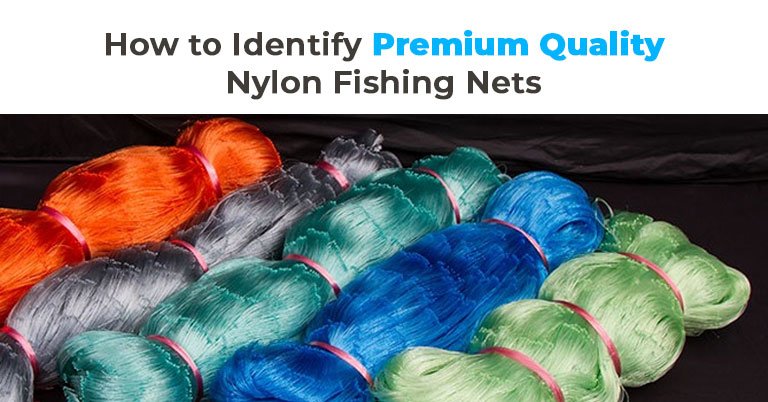
For commercial fishermen, aquaculture operators, and marine businesses, investing in a high-quality nylon fishing net is essential for achieving better fishing efficiency and reducing long-term operating costs. While many fishing nets may appear similar at first glance, their quality can vary significantly depending on the raw materials, manufacturing process, and construction standards.
A premium-quality nylon fishing net is designed to withstand harsh marine environments, heavy catches, and continuous use without compromising performance. Knowing how to identify a high-quality fishing net before making a purchase can help you avoid frequent replacements, reduce maintenance costs, and improve your overall fishing operations.
In this guide, we’ll explain the key characteristics that define premium nylon fishing nets and what buyers should look for when selecting the right product.
Why the Quality of Nylon Fishing Nets Matters
Fishing nets are constantly exposed to saltwater, sunlight, waves, abrasion, and heavy loads. A poorly manufactured net may deteriorate quickly, leading to tears, reduced catch efficiency, and increased downtime.
Premium-quality nylon fishing nets offer several advantages:
- Higher tensile strength
- Better resistance to abrasion
- Longer service life
- Improved knot stability
- Consistent mesh dimensions
- Greater reliability in demanding fishing conditions
Although quality nets may have a higher initial cost, they often prove to be more economical over time due to their durability and dependable performance.
1. Check the Quality of the Nylon Material
The foundation of every durable fishing net is the quality of its raw material.
Premium nylon fishing nets are manufactured using high-grade nylon fibers that provide:
- Excellent flexibility
- High strength
- Superior resistance to wear
- Better elasticity
- Long-lasting performance in marine environments
Low-grade materials may initially look similar but often become brittle, weaken quickly, or lose their shape after prolonged exposure to seawater and sunlight.
When purchasing fishing nets, always ask about the quality and grade of the nylon used during manufacturing.
2. Inspect Mesh Uniformity
One of the easiest ways to identify a premium fishing net is by examining the mesh.
A high-quality fishing net should have:
- Uniform mesh openings
- Consistent spacing throughout the net
- Proper alignment
- Even construction without distortion
Irregular mesh sizes can reduce catch efficiency by allowing target fish to escape or increasing unwanted bycatch.
Consistent mesh formation reflects precision manufacturing and strict quality control.
3. Evaluate Knot Strength
If you are purchasing knotted fishing nets, inspect the knots carefully.
Strong knots should be:
- Firmly secured
- Evenly tied
- Consistent throughout the net
- Resistant to slipping under pressure
Weak or poorly tied knots are often the first point of failure during heavy fishing operations.
For knotless fishing nets, examine the knitted intersections to ensure they are smooth, uniform, and free from defects.
4. Test Tensile Strength
Commercial fishing nets regularly handle heavy catches and strong water currents.
Premium nylon fishing nets are manufactured to withstand high tensile loads without breaking or stretching excessively.
While laboratory testing provides the most accurate measurements, buyers can often assess overall strength by checking:
- Yarn thickness
- Twisting quality
- Construction consistency
- Manufacturer specifications
A reliable manufacturer will usually provide technical information about the net’s strength and intended applications.
5. Examine the Yarn Quality
The yarn used in fishing net manufacturing has a direct impact on durability.
High-quality yarn should appear:
- Smooth and uniform
- Free from visible defects
- Evenly twisted
- Consistent in thickness
Uneven or rough yarn often indicates inconsistent manufacturing, which can reduce the lifespan of the net.
Premium manufacturers use advanced production processes to ensure every strand meets strict quality standards.
6. Assess Resistance to Abrasion
Fishing nets frequently come into contact with rocks, boat decks, equipment, and rough underwater surfaces.
Premium nylon fishing nets are designed with excellent abrasion resistance to minimize wear during daily operations.
A durable net maintains its strength even after repeated use, reducing the need for frequent repairs or replacements.
This is especially important for commercial fishing operations where equipment reliability directly affects productivity.
7. Look for UV Resistance
Fishing nets spend long hours exposed to direct sunlight.
Without proper UV resistance, nylon fibers can gradually weaken, fade, and lose their structural integrity.
Many premium fishing nets are manufactured using UV-stabilized materials that help extend the life of the net, particularly in tropical and coastal regions where sunlight exposure is constant.
Choosing UV-resistant nets can significantly improve long-term performance.
8. Consider Manufacturing Standards
Not all fishing nets are manufactured using the same production processes.
Reputable manufacturers invest in:
- Modern production machinery
- Skilled technicians
- Precision weaving or knitting technology
- Heat-setting processes
- Comprehensive quality inspections
These manufacturing practices ensure consistent product quality and reliable field performance.
Buying from an experienced manufacturer often provides greater confidence in the product’s durability.
9. Check for Proper Finishing
A premium fishing net should have a clean and professional finish.
Look for:
- Smooth edges
- Secure joins
- Proper rope attachments
- Neatly assembled float and sinker lines
- No loose threads or damaged sections
Attention to detail during finishing reflects the manufacturer’s commitment to quality.
10. Choose a Trusted Manufacturer
One of the most effective ways to ensure you’re purchasing a premium nylon fishing net is to choose a manufacturer with proven industry experience.
A reliable manufacturer typically offers:
- Consistent product quality
- Premium raw materials
- Product customization
- Technical expertise
- Quality assurance
- Strong customer support
Reading customer reviews, checking industry certifications, and evaluating manufacturing capabilities can help buyers make informed purchasing decisions.
Common Mistakes to Avoid
When buying fishing nets, many buyers focus only on price. However, choosing the cheapest option often results in higher maintenance costs and shorter product life.
Avoid these common mistakes:
- Ignoring raw material quality
- Overlooking mesh consistency
- Choosing the wrong mesh size
- Purchasing from unknown suppliers without quality assurance
- Failing to inspect knot strength and finishing
A careful evaluation before purchase can save both time and money in the long run.
Conclusion
Identifying a premium-quality nylon fishing net requires more than just a quick visual inspection. Factors such as raw material quality, mesh consistency, knot strength, UV resistance, abrasion resistance, yarn construction, and manufacturing standards all contribute to the durability and performance of the final product. By understanding these characteristics, commercial fishermen, aquaculture businesses, and marine professionals can invest in fishing nets that deliver reliable performance, improve catch efficiency, and offer long-term value.
At Babu Nylons, we are committed to manufacturing premium nylon fishing nets that meet the evolving needs of the commercial fishing and aquaculture industries. Using high-quality raw materials, advanced manufacturing technology, and rigorous quality control processes, we produce durable fishing nets and marine products designed for consistent performance in challenging environments. With a strong focus on quality, reliability, and customer satisfaction, Babu Nylons continues to be a trusted partner for businesses seeking dependable fishing solutions.