
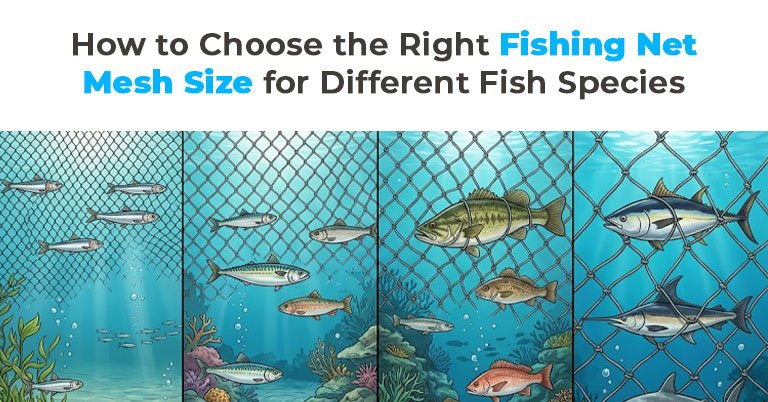
Fishing is more than just casting a net into the water. For commercial fishermen, aquaculture businesses, and marine professionals, selecting the right fishing net mesh size can significantly impact catch efficiency, fish quality, and long-term sustainability. Using the wrong mesh size can result in undersized fish being caught, damaged catches, increased bycatch, and even regulatory issues in some regions.
Understanding how mesh size works and choosing the appropriate net for your target species can help improve productivity while supporting responsible fishing practices.
What Is Fishing Net Mesh Size?
Mesh size refers to the opening between the knots or intersections of a fishing net. It determines which fish can pass through the net and which ones are retained. Mesh size is typically measured either by the stretched mesh opening or by the knot-to-knot distance, depending on regional standards and fishing applications.
A properly selected mesh size allows your target fish species to be caught efficiently while allowing smaller, juvenile fish to escape and continue growing. This not only improves the quality of your catch but also contributes to healthier fish populations.
Why Does Mesh Size Matter?
Choosing the correct mesh size offers several important benefits for commercial fishing operations.
- Improves catch efficiency by targeting the intended fish species.
- Reduces unwanted bycatch of smaller or non-target fish.
- Minimizes damage to the fish during capture.
- Helps comply with local fisheries regulations.
- Supports sustainable fishing practices by protecting juvenile fish.
The right mesh size is not just about catching more fish. It is about catching the right fish.
Factors to Consider Before Selecting Mesh Size
1. Target Fish Species
Different fish species vary greatly in body shape, size, and behavior. A mesh size suitable for mackerel may not work effectively for tuna or shrimp.
For example:
- Small pelagic fish generally require smaller mesh openings.
- Medium-sized species need moderate mesh sizes.
- Large commercial fish require wider mesh openings for effective capture.
Understanding the average size of your target species is the first step in choosing the appropriate fishing net.
2. Fishing Method
The type of fishing operation also influences mesh selection.
Common fishing methods include:
- Gill nets
- Trawl nets
- Seine nets
- Cast nets
- Lift nets
Each type of net is designed to work differently, so the ideal mesh size will vary depending on how the net captures fish.
3. Fishing Location
Fishing conditions in coastal waters differ significantly from those in deep-sea environments.
Coastal fishing often targets smaller fish species, while offshore commercial fishing usually focuses on larger species. Water depth, current strength, and seabed conditions also influence the choice of net design and mesh size.
4. Local Fishing Regulations
Many countries have regulations specifying minimum mesh sizes to prevent overfishing and protect juvenile fish populations.
Before purchasing new fishing nets, always verify the regulations applicable to your fishing area. Following these guidelines not only avoids penalties but also helps maintain healthy marine ecosystems.
General Mesh Size Recommendations
While exact mesh sizes depend on local regulations and fishing objectives, the following guidelines can help:
| Fish Type | Typical Mesh Requirement |
| Sardines, Anchovies | Small mesh |
| Mackerel | Medium mesh |
| Tilapia | Medium mesh |
| Salmon | Medium to large mesh |
| Tuna | Large mesh |
| Shrimp | Fine mesh |
These recommendations serve as a starting point. Commercial operators should always consider species size, fishing location, and legal requirements before making a final decision.
Problems Caused by Using the Wrong Mesh Size
Selecting an incorrect mesh size can negatively affect both fishing efficiency and profitability.
Catching Juvenile Fish
A mesh opening that is too small captures immature fish before they reach market size. This reduces future fish populations and may violate fisheries regulations.
Losing Market-Size Fish
If the mesh is too large, valuable target fish may escape, resulting in lower catch volumes and reduced revenue.
Increased Bycatch
Improper mesh sizing often traps unwanted marine species, increasing sorting time and reducing operational efficiency.
Net Damage
Using an unsuitable mesh size for the fishing environment can place excessive stress on the net, leading to premature wear and frequent repairs.
How to Select the Best Fishing Net
Before investing in new fishing nets, ask yourself these questions:
- Which fish species am I targeting?
- What is the average size of these fish?
- Which fishing method will I use?
- Am I fishing in coastal waters or offshore?
- Are there legal mesh size requirements in my region?
- Is the net manufactured using high-quality nylon materials?
Considering these factors helps ensure better performance and a longer service life for your fishing equipment.
Why High-Quality Net Materials Matter
Even the correct mesh size cannot deliver optimal performance if the net itself is poorly manufactured.
Premium nylon fishing nets provide several advantages:
- Excellent tensile strength
- Better knot stability
- High abrasion resistance
- Longer service life
- Improved resistance to harsh marine environments
Investing in durable, high-quality nets reduces replacement costs and improves operational efficiency over time.
Conclusion
Choosing the right fishing net mesh size is one of the most important decisions in commercial fishing. The correct mesh size improves catch quality, reduces bycatch, supports sustainable fishing, and helps maximize operational efficiency. By considering your target species, fishing method, location, and regulatory requirements, you can select a fishing net that delivers reliable performance season after season.
At Babu Nylons, we understand that every fishing operation has unique requirements. As a trusted manufacturer of high-quality nylon fishing nets and marine products, we focus on delivering durable, precision-engineered solutions designed for commercial fishing, aquaculture, and marine industries. Our commitment to quality manufacturing, premium raw materials, and customer satisfaction helps fishermen and businesses choose reliable fishing nets that perform efficiently even in demanding marine environments.