
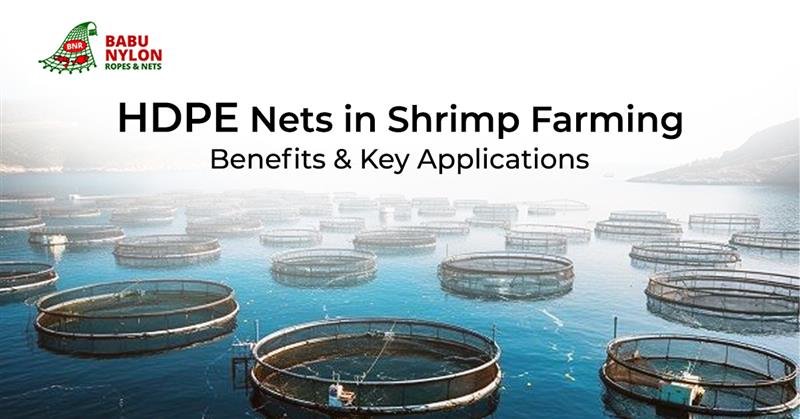
Shrimp farming has come a long way from simple open ponds and manual monitoring. As global demand for shrimp continues to rise, producers are under increasing pressure to maximize yields while keeping operations sustainable and cost-effective. One tool quietly driving this shift is the HDPE (High-Density Polyethylene) net, a simple yet critical component that’s improving how farmers protect, manage, and scale their shrimp production.
What Makes HDPE Nets Stand Out?
Not all netting materials are created equal. HDPE nets have become the preferred choice in aquaculture for a handful of compelling reasons.
Durability: HDPE is built to last. These nets resist physical wear and tear in ways that natural fiber netting simply cannot, making them a reliable long-term investment for farming operations of any size.
UV Resistance: Shrimp farms are exposed to harsh sunlight year-round. HDPE nets are engineered to withstand prolonged UV exposure without degrading, meaning they retain their structural integrity season after season.
Predator Protection: Birds, reptiles, and other animals pose a constant threat to shrimp populations. HDPE nets act as an effective physical barrier, reducing losses and protecting the investment that goes into each pond.
Chemical Resistance: Aquaculture environments often involve treatments and water additives. HDPE holds up well against these chemical exposures, minimizing the risk of net breakdown or contamination.
Together, these properties make HDPE nets one of the most practical upgrades a shrimp farmer can make.
Recent Trends Driving HDPE Net Adoption
The aquaculture industry is evolving rapidly, and two trends in particular are accelerating the use of HDPE nets.
High-Density Farming
As land and water resources become more constrained, farmers are shifting toward high-density shrimp farming—raising more shrimp in smaller water volumes. This approach demands tighter control over the farming environment, including stronger containment and protection systems. HDPE nets provide the structural support needed to manage these intensive setups without frequent replacement or failure.
Biofloc Systems
Biofloc technology (BFT) is gaining traction as a sustainable alternative to traditional pond farming. In biofloc systems, beneficial microorganisms are cultivated within the water to improve water quality and serve as a supplemental food source for shrimp. These systems require careful environmental management, and HDPE nets play a role in maintaining pond structure, preventing external contamination, and supporting the controlled conditions that biofloc systems depend on.
Both trends reflect a broader move toward precision aquaculture and HDPE nets are a foundational component of that shift.
Practical Applications in Shrimp Farming
HDPE nets serve distinct purposes at different stages of the shrimp production cycle.
Nursery Ponds
The early stages of shrimp development are the most vulnerable. In nursery ponds, HDPE nets are used to create protected enclosures that shield post-larvae from predators and environmental disturbances. Fine mesh options help maintain water flow while keeping juvenile shrimp safely contained during their most critical growth phase.
Grow-Out Ponds
Once shrimp move to grow-out ponds, HDPE nets serve a broader range of functions—perimeter fencing to deter predators, surface covers to reduce bird interference, and partitioning within larger pond systems. Their flexibility in mesh size and configuration makes them adaptable to a wide range of pond designs and production scales.
Whether a farmer is running a small family-operated pond or a commercial-scale facility, HDPE nets can be customized to fit the specific needs of each stage.
The Right Netting Partner Makes All the Difference
Choosing the right HDPE net isn’t just about picking the cheapest option, mesh size, tensile strength, UV stabilization, and knot quality all affect long-term performance. That’s where a trusted manufacturer matters.
Babu Nylons has established itself as a leading supplier of premium HDPE netting solutions for the aquaculture industry. With a focus on quality manufacturing and a deep understanding of the practical demands shrimp farmers face, Babu Nylons offers netting products designed to perform across nursery and grow-out applications alike. Their nets are built to withstand the rigors of high-density and biofloc farming environments, giving producers the reliability they need to focus on what matters most: a healthy, high-yield harvest.
For shrimp farmers looking to strengthen their operations with durable, purpose-built netting, Babu Nylons is a partner worth considering.